John Burroughs
1837–1921
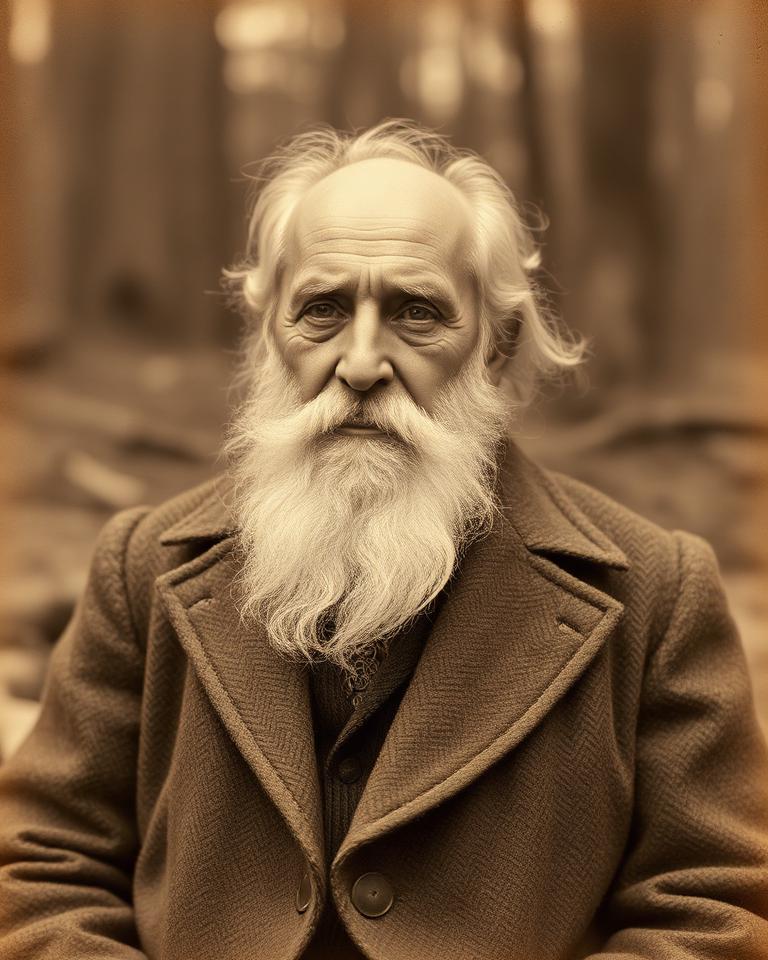
Beloved American naturalist and essayist of the late 19th century.
Born on a hill farm in Roxbury, in the Catskills of New York, John Burroughs grew up among the woods and pastures that would furnish the imagery of his life's work. After teaching school and working for nearly a decade as a clerk in the U.S. Treasury Department in Washington — where he became a close friend of Walt Whitman — he returned to the Hudson Valley and devoted himself entirely to writing.
From his rustic study at Riverby and the bark-clad cabin he called Slabsides, Burroughs produced more than two dozen volumes — Wake-Robin (1871), Birds and Poets, Signs and Seasons, Ways of Nature — that made the literary nature essay a popular American form. He was a companion of John Muir in Yosemite, of Theodore Roosevelt at the White House and Yellowstone, and of Henry Ford and Thomas Edison on their celebrated camping trips.
Burroughs was a frequent contributor to The Century Magazine under Richard Watson Gilder's editorship, and the two men shared a deep, almost devotional love of rural New York and New England. The kind of stewardship Burroughs preached — quiet attention to land, season, and creature — became the moral grammar of Four Brooks Farm itself.