Henry David Thoreau
1817–1862
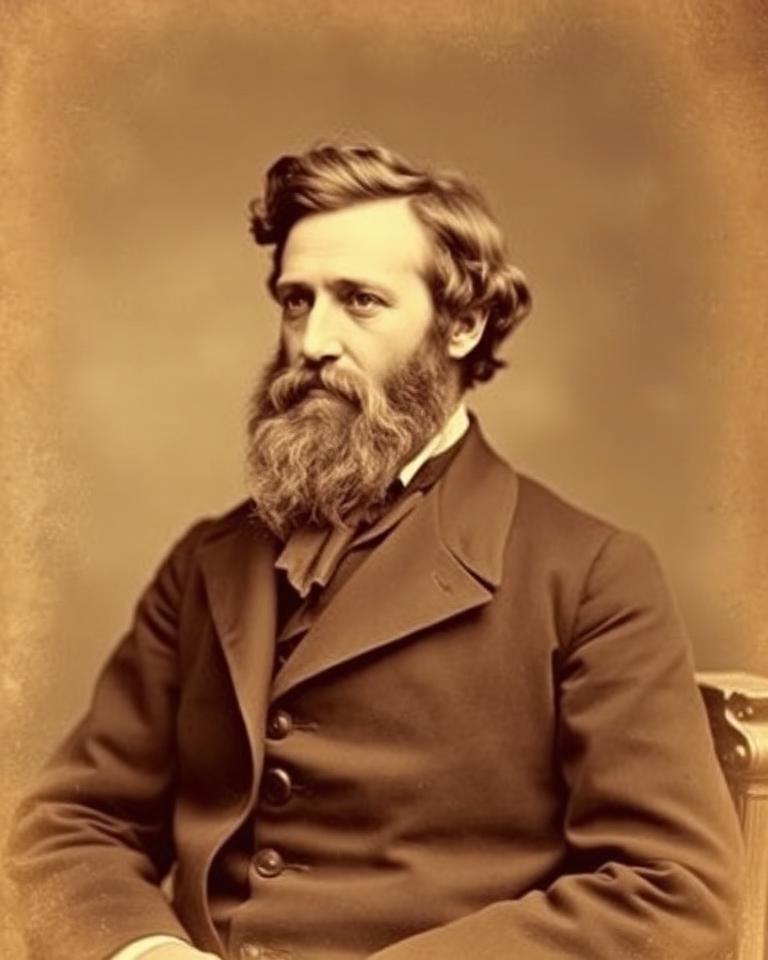
Naturalist, essayist, and philosopher whose ideas profoundly shaped the circle's literary world.
Born in Concord, Massachusetts, Henry David Thoreau was educated at Harvard and spent his life in the orbit of the New England Transcendentalists, working as a teacher, surveyor, and pencil-maker in the family workshop while writing the essays, journals, and books that would eventually reshape American letters.
His two-year experiment at Walden Pond (1845–1847) produced Walden; or, Life in the Woods (1854), a meditation on simplicity, self-reliance, and the moral instruction of the natural world. His 1849 essay "Resistance to Civil Government" — later known as "Civil Disobedience" — became foundational reading for Tolstoy, Gandhi, and Martin Luther King Jr.
Although Thoreau died before the Gilders' generation came of age, his writings were a constant presence in the salon at the Studio and at Four Brooks Farm. Richard Watson Gilder, as editor of The Century Magazine, helped sustain the late-nineteenth-century revival of Thoreau's reputation, publishing essays on Concord and championing the rural, contemplative life that Thoreau had made an article of American faith.