Augustus Saint-Gaudens
1848–1907
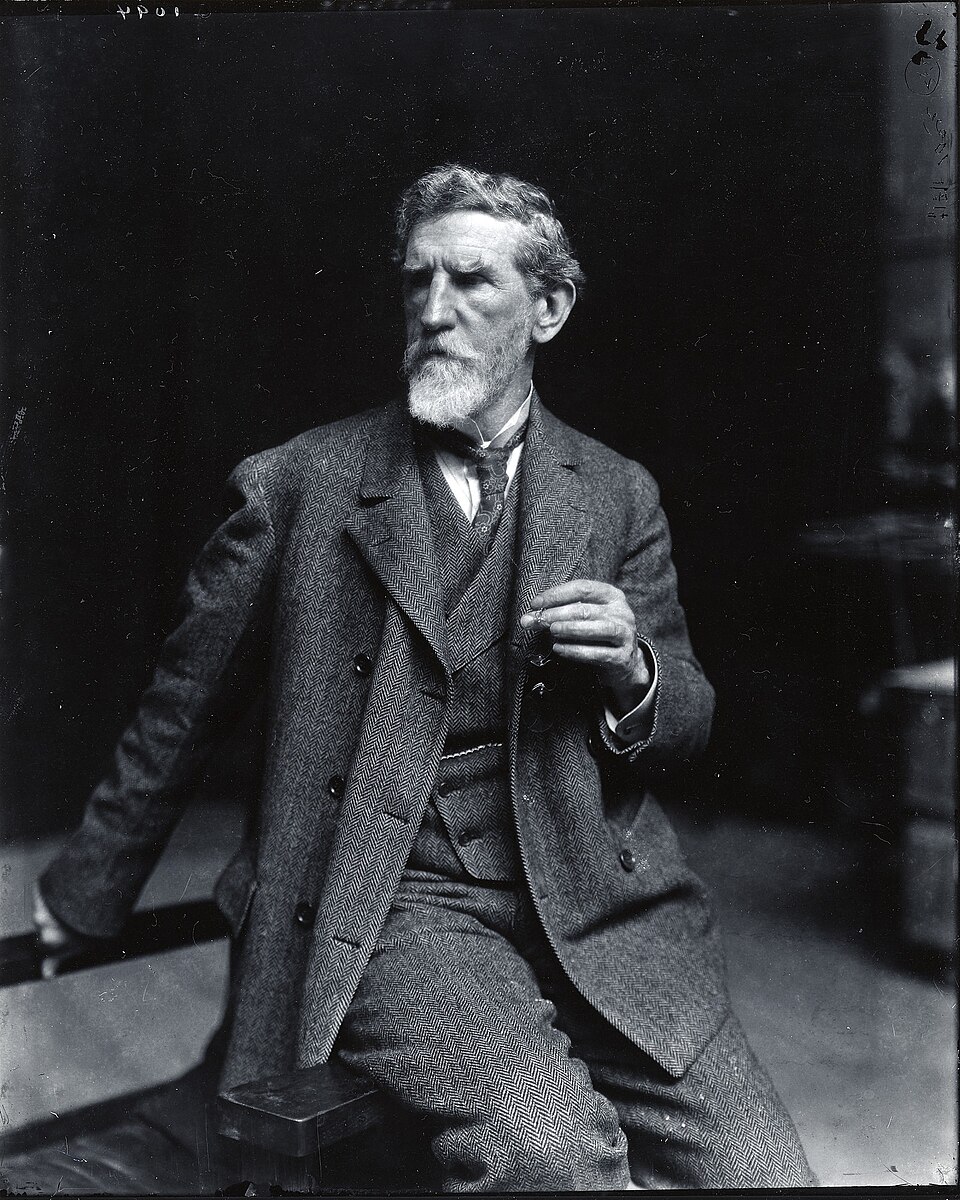
The preeminent American sculptor of the Gilded Age and a close friend of the Gilders.
Born in Dublin to a French father and Irish mother, Augustus Saint-Gaudens was brought to New York as an infant and apprenticed to a cameo cutter at the age of thirteen. He trained in Paris at the École des Beaux-Arts and in Rome, where he absorbed the classical tradition that he would later fuse with a distinctly American sensibility, becoming the most celebrated sculptor of his generation.
His monumental works — the Admiral Farragut Monument in Madison Square (1881), the Standing Lincoln in Chicago (1887), the Shaw Memorial on Boston Common (1897), the Sherman Monument at the edge of Central Park (1903), and the gold double eagle coin commissioned by Theodore Roosevelt (1907) — defined the public face of American civic art at the turn of the twentieth century.
Saint-Gaudens was an intimate of Richard Watson Gilder and Helena de Kay Gilder, who hosted him at their studio-home on East 15th Street, the so-called "Studio." In 1878 he joined Helena, Wyatt Eaton, and others in founding the Society of American Artists, the breakaway organization that opened American art to the influence of the Paris ateliers. He sculpted the celebrated bronze relief of Helena that hangs today in the Metropolitan Museum of Art and a companion medallion of Richard, fixing the Gilders forever in the artistic record of the Gilded Age.