Dr. Walter Walker Palmer I
1882–1950
The Man Who Saved Four Brooks
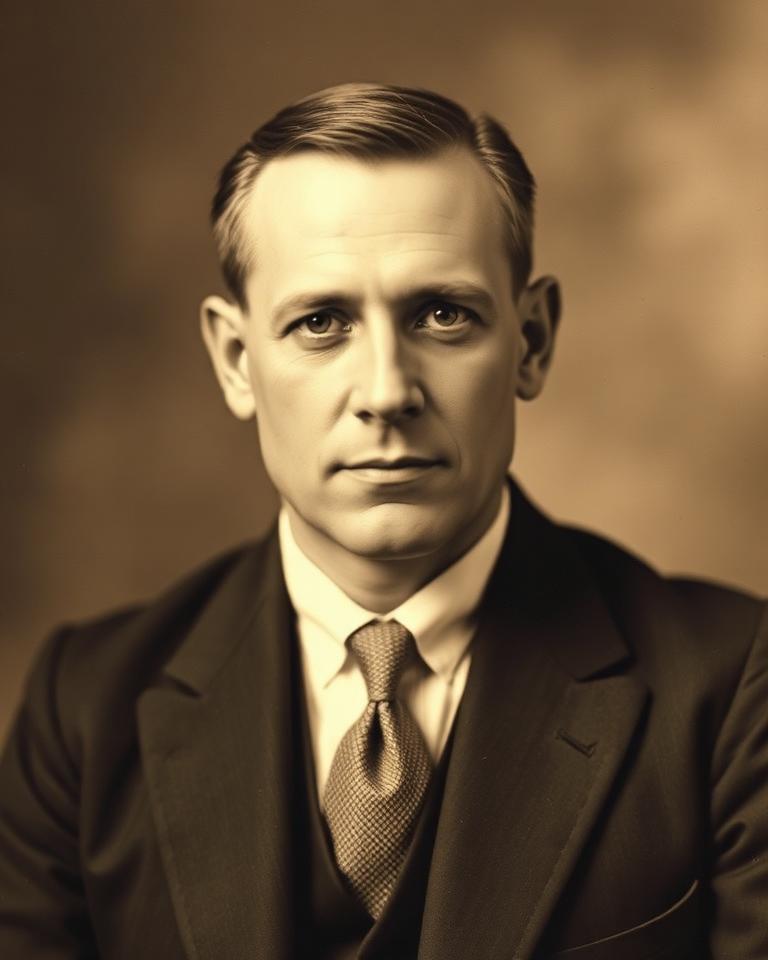
Distinguished Harvard-trained physician, Columbia department chair, and patriarch of the Palmer line at Four Brooks Farm.
DR. Walter Walker Palmer, a distinguished emeritus member of this Society, died suddenly on October 25th, 1950 of a heart attack at his farm in the Berkshire hills. There had been no premonition of illness, and he was happily working with his sons in the fields when the end came. The sudden void created by his death came as a great shock not only to his family and colleagues but to all manner of persons who loved him for his companionship or who depended upon him for his wisdom and strength. And yet, stark realism prompts within us a reverent acceptance of our loss, for it means this kindly friend, at the height of his effectiveness, was granted his oft-expressed wish of being spared a lingering illness or the incapacities of advancing age.
DR. Palmer’s career has a fictional quality in that a modest, gently-spoken farm boy, without early medical indoctrination and without powerful sponsorship should rise to pre-eminence in his field. He became an acknowledged leader at a period when an avalanche of epoch-making advances in diagnostic and therapeutic methods continually created situations requiring momentous decisions, and his contributions in developing new points of view in the study of disease, in formulating the philosophy of medical training and in broadening the scope of the modern clinic will long be recognized and appreciated.
He was born near Southfield, Massachusetts on February 27, 1882, and began formal schooling at nearby Mt. Herman Academy. He graduated with distinction from Amherst in 1905, where he is still remembered as the rugged linesman and varsity captain who in his day had no peer on the gridiron.
While an undergraduate he published his first scientific paper describing a new species of primitive mammal which he had excavated in the alluvial plains of Wyoming. His professional career began in 1910, when he graduated from Harvard Medical School and took up his internship at the Massachusetts General Hospital. While here his interest became so centered on the chemical derangements found in certain clinical conditions that he abandoned his original intention of entering practice to accept a residency at the Massachusetts General and an instructorship in Physiological Chemistry at Harvard, in order to further his studies on the altered acid-base equilibrium occurring in diabetics and nephritises. In 1915 he joined the medical group at the Rockefeller Institute where he continued to investigate metabolic derangements and incidentally devised the first reliable quantitative method for hemoglobin determination.
Two years later he became Associate Professor of Medicine at Columbia, and during the trying period of the First World War remained as a restless civilian at his post where he was needed to direct the medical service of the Presbyterian Hospital, instead of participating actively in the armed services where he held a commission in the Medical Reserve Corps.
In 1919 Dr. Palmer became Associate Professor of Medicine at Johns Hopkins University» By this time his capacities as an investigator were becoming appreciated, and a number of now-famous scholars were attracted to his laboratory to further their training. But the approach to clinical problems through evaluation of disturbed physiologic mechanisms was not understood by some nor cordially accepted by those who had been indoctrinated in the rituals of didactic diagnosis and descriptive nomen clature, He and his co-workers were on occasion subjected to strong opposition and biting ridicule, but the calmness and dignity which he displayed under adverse criticism greatly hastened the advent of the cooperative spirit that now prevails in most worthwhile clinical between the investigator and the practitioner, In 1921 he returned to the Columbia University College of Physicians and Surgeons as the first full-time director of the Department of Medicine, and he occupied that chair until his retirement in 1947. During these active twenty-six years, the Columbia-Presbyterian Medical Center was completed and he developed a large and effective department, uniting the talents of Instructors, full-time investigators, and part-time practicing physicians, He believed in the essentiality of each of these groups in fulfilling the obligations of a teaching institution to students, patients, and to medical progress. But the activity closest to his heart was the training of young staff officers so as to develop in them sound medical judgment and a discriminating critique of their own observations and of the work of others. The door of his office was never closed to his colleagues, who felt free to seek his advice on obscure cases or to talk over their research problems, or even bear their closest personal difficulties. He had warm understanding and a remarkable gift of evaluation, and could tersely dismiss unessential and misleading factors, leaving only the constructive elements of a snarled situation for final scrutiny. This capacity to resolve complexities to the simplest denominator was probably the basis for his excellent clinical judgment and his amazing executive ability. Frankness, vision, gentleness, and selflessness were beautifully blended in Bill Palmer, and everyone associated with him trusted him and loved him as a man and as a leader.
Even a partial enumeration of Dr. Palmer’s participation in local and national activities attests to his diversified interests and to his full busy life. He was not indiscriminately gregarious or politically ambitious, nor was he a facile speaker before formal gatherings, but his clarity of vision and his idealism led to positions of trust and honor in many scientific and learned organizations. He was at one-time president of the Harvey Society, the American College of Physicians, and of our own New York Clinical Society, and served on the council and executive committees of many others. He was for many years a member of the Council on Pharmacy and Chemistry of the American Medical Association, and also a member of the National Board of Medical Examiners. During the war years, he was an important figure in national planning and served as chairman of the Committee on Drugs and Medical, Supplies of the National Research Council. Afterward, he was appointed chairman of the Committee on Medical Affairs to draw up recommendations Included in the Bush report to the President on the plan of organization of a National Science Foundation.
He was the author of numerous scientific papers and textbook articles dealing chiefly with derangements occurring in metabolic diseases and with his studies on the thyroid, which he conducted while bearing. heavy teaching and administrative responsibilities. He Was also for many years on the editorial staff of the Archives of Internal Medicine and the Journal of Biological Chemistry, and of Medicine, and at the time of his death was editor-in-chief of the Nelson System of Medicine, and chaiman of the Advisor Committee of the American Journal of Medicine, while serving as director of the Public Health Institute of the City of New York, where within the few years that remained after his retirement from the College of Physicians and Surgeons he lad attracted an enthusiastic, brilliant group of workers and had organized an effective, productive unit, of which he was justly proud.
But the greatness of Walter Palmer does not lie exclusively in his accomplishments. To him, living was a rich and abundant privilege. He relished and glorified the moments of leisure that came after hard work and would enter into the spirit of relaxation with buoyant and contagious enthusiasm. He enjoyed his concerts, his golf, his work-shop, and his convivial gatherings with his colleagues, but to him, his home was a special source of pride and happiness. Here he was beloved by an appreciative family and here an endless stream of guests was accorded a rare welcome and the stimulating companionship of his and Mrs. Palmer’s talented friends, Throughout his daily living there was & serenity and simplicity that was engendered in the New England countryside and this trait never left him. The Tyringham Talley with its wooded hills and little clearings made by the hands of early settlers meant more and more to him with the years, and here on his farm, he went for strength and inspiration and for detachment from worldly bondage. And here, said the surroundings he loved bout, on a colorful, crisp late Autumn after-noon he laid down his tasks and dreams for the future, to be carried out as best they can by younger hands, many of his own training. Men of his stature can never be replaced; the emptiness he leaves is filled only by the tent that his spirit lives in the hearts of those who labor after him.
Save the warm rich history and the incredible role she played in writing the path of our American history set both here and abroad. CLICK HERE TO LEARN HOW YOU CAN HELP Four Brooks Farm in Berkshire County will become a museum and cultural center to honor the Gilded Age figures Richard Watson Gilder and Helena DeKay Gilder, who owned the property. The house features architectural elements by Stanford White and hosted notable guests like President Grover Cleveland and Mark Twain. The Gilders often retreated here for creativity. The property is currently owned by Reese and Linda Palmer, who plan to establish the museum with the Gilder Palmer Sanctuary nonprofit. They aim to raise upwards of $1,500,000USD for the project, with a focus on family-friendly cultural activities. Please Contact Linda Palmer for more information at 1+ (352)-812-6350.
Donate To Gilder Palmer Sanctuary❤️