Richard Watson Gilder
1844–1909
Editor of The Century Magazine, Poet, and Reform Advocate
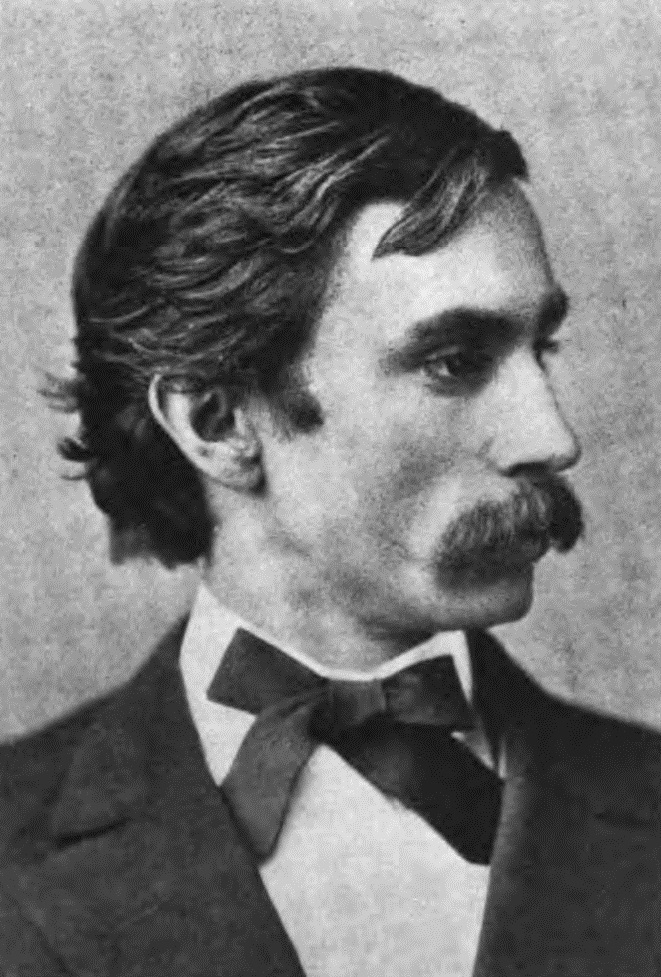
For nearly three decades, editor-in-chief of The Century Monthly Magazine — one of the most prestigious and influential positions in American publishing.
For nearly three decades Richard Watson Gilder, as editor-in-chief of the Century Monthly Magazine, held one of the most prestigious and influential positions in American publishing. He and his wife, artist Helena de Kay, also exerted considerable influence in New York’s cultural circles and were known for their Friday-evening gatherings for artists, writers, and musicians at their Manhattan residence. Cecilia Beaux, who trained at the Pennsylvania Academy of the Fine Arts and at the Académies Julian and Colorossi in Paris, was a close friend of the Gilders. To contemporary viewers, this elegant and sympathetic rendering of the editor conveyed the close rapport between sitter and artist.
Richard Watson Gilder was the head of Citizens League organizing, the founder and first President of the Nursery School league as well as president of the New York Society for the Blind. He was a man of letters; a lover of his type, working practically to improve social and economic conditions, and taking a keen & efficient interest in our social life. Richard Watson Gilder’s most frequent correspondents were his editors and later writers at Scribner’s Monthly Magazine and The Century, though letters were also received from several of the most important figures of nineteenth- and early twentieth-century New York City’s arts and letters, as well as in the circles of society and reform.
His correspondence (1861-1909) includes 21 books of letters, a small number of outgoing letters by Richard Watson Gilder, and a large amount of inbound correspondence related to his editorial work for Scribner’s Monthly, the Century, and to his social and other professional activities. The Gilder’s True contributions to American letters came through the editing of a superior literary journal. He was an associate editor of Scribners Monthly Magazine (now The Century) from its founding in 1870 until 1881, when, upon J.G. Hollands death, he became managing editor. After working for the Newark, N.J., daily newspaper for three years (1865-1868), he founded, with Newton Crane, The Newark Morning Register.
Gilders’ education began in his father’s girls’ school in Bellevue, Bordentown, N.J., where he was the only boy enrolled. He later meets & marries Helena Dekay, minent authors, artists and muses in their own rite. Their first child Helena Marion Dekay Gilder would live only to be 6 months. Their third child, Richard Watson Dekay Gilder would live only a few days. Their son, Rodman de kay Gilder (1877-1953), became a writer and married Louise Comfort Tiffany.
Louis comfort Tiffany, William Merritt Chase, John LaFarg, Albert Pinkham Rider, & Alexander Wilson Drake helped along with Saint Gauden and others, to establish the Society of American Artists, now merged into the National Academy, & the Art Students League in New York. Their circle of friends that would gather at their studio salon was to become some of the most famous giants in literature, art, music & politics.
The famous Saint Gauden bronze plaque of the family is owned by the Metropolitan museum of Art. Paintings are in the Smithsonian & Portrait Museum In Washington DC.
Paintings of Helen and Richard sit in the Smithsonian museum and Richards and Helen’s diaries and the corresponding letters in a collection at the Lilly library.
Helena was known as a subject for the love poems written by Richard Watson Gilder, Love letters and paintings done by Winslow Homer, John Lafarge,Mary Hallock Foote & others. Mr. and Mrs. Gilder collaborated on a number of books written by Richard Watson Gilder, with her serving as an illustrator for several of his books, Two Worlds and Other Poems